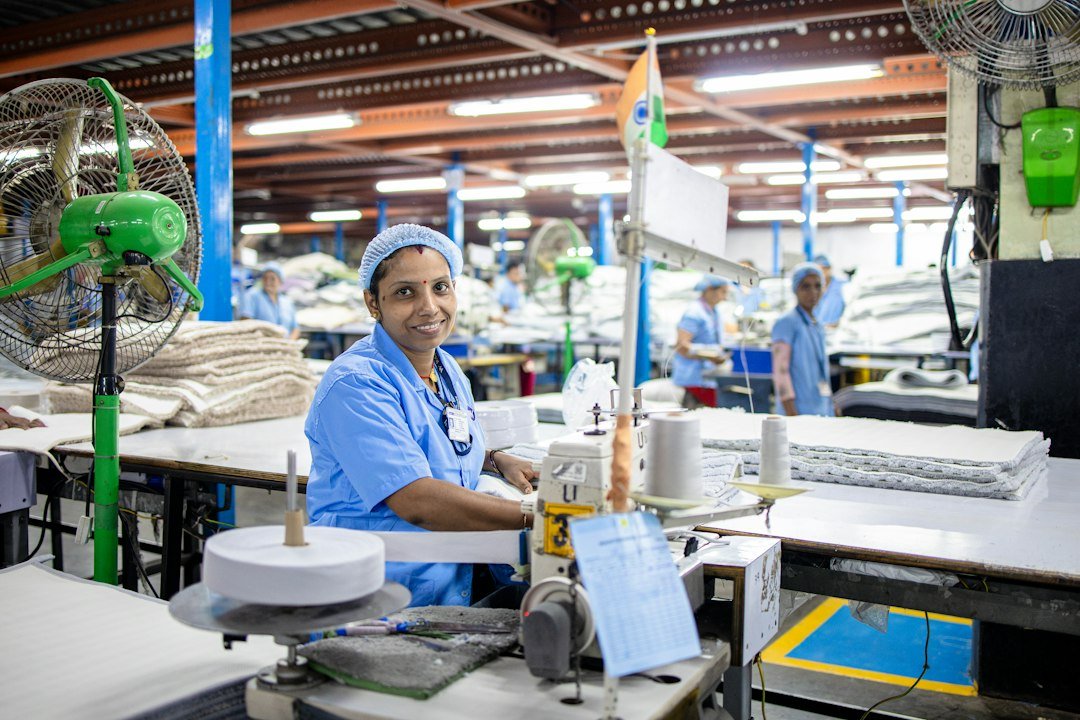
Why AI Matters for Small Manufacturers in Punjab
Punjab’s manufacturing landscape is evolving rapidly. Small and medium‑size enterprises (SMEs) face intense competitive pressure from larger firms in Delhi, Mumbai and even overseas imports. At the same time, rising labor wages and soaring energy bills in the region squeeze profit margins. In this context, AI solutions for small manufacturers in Punjab emerge as a cost‑effective catalyst for growth, enabling owners to do more with less.
Automating Production Lines with AI
Smart sensors and IoT for real‑time monitoring
IoT‑enabled sensors collect temperature, vibration, and throughput data from every machine. AI algorithms analyse this stream in real time, alerting supervisors to deviations before they become problems.
Predictive maintenance to avoid downtime
Instead of waiting for a breakdown, predictive models forecast when a motor or conveyor belt is likely to fail. Maintenance can be scheduled during planned downtimes, preserving valuable production hours.
Case study: A textile unit in Ludhiana reducing cycle time by 30%
One mid‑size textile manufacturer in Ludhiana installed AI‑driven line monitoring. By automatically adjusting loom speed based on yarn tension data, the plant trimmed its average cycle time from 10 minutes to 7 minutes – a 30% improvement that translated into an extra ₹12 Lakhs of revenue per quarter.
AI‑Driven Quality Control
Computer vision for defect detection
High‑resolution cameras coupled with deep‑learning models scan each product as it moves along the line. Defects such as stitching errors, surface scratches or colour mismatches are flagged instantly.
Machine‑learning models that learn product standards
Unlike rule‑based systems, these models improve over time. They learn from every inspection, adapting to new patterns and reducing false positives.
Example: A metal‑fabrication shop in Jalandhar cutting scrap by 25%
Using AI‑powered vision, a Jalandhar metal‑fabrication SME identified subtle alignment issues that previously resulted in scrap. Within six months the shop reduced waste by a quarter, saving roughly ₹5 Lakhs in raw‑material costs.
Cutting Operational Costs Using AI
Energy‑optimization algorithms for machinery
AI models analyse power consumption across shifts and recommend optimal load distribution. Machines that run at peak efficiency consume up to 15% less electricity.
AI‑based inventory forecasting to minimize waste
Demand‑driven forecasting prevents over‑stocking of raw materials that can degrade or become obsolete. The system automatically generates purchase orders aligned with projected production.
Real‑world ROI: A food‑processing SME saving ₹8 Lakhs annually
A small food‑processing unit in Patiala integrated AI for energy scheduling and inventory planning. The combined savings on electricity and excess stock amounted to more than ₹8 Lakhs in the first year, delivering a clear return on investment.
Step‑by‑Step Implementation Guide for Punjab SMEs
Assess readiness and define clear AI goals
Start with a workshop to map current processes, data sources and pain points. Set measurable objectives – for example, “reduce machine downtime by 20% within six months.”
Choose the right low‑code AI platform
Low‑code platforms let non‑technical staff build models using drag‑and‑drop interfaces. Look for solutions that support local languages and integrate with popular ERP systems like Tally or Zoho Books.
Pilot project: data collection, model training, and validation
Collect a month’s worth of sensor and production data, train a prototype model, and test it on a single line or workstation. Validate results against baseline metrics before scaling.
Scale up: integration with ERP and staff training
Once the pilot proves ROI, integrate AI insights into the main ERP dashboard. Conduct hands‑on training sessions for supervisors and floor staff to ensure smooth adoption.
Overcoming Common Challenges
Data quality and availability in small shops
Many small manufacturers still rely on paper logs. Begin by digitising key data points – even a simple spreadsheet can feed an AI model when combined with sensor data.
Budget constraints and financing options
AI projects can be phased to spread costs. Additionally, Punjab’s MSME development schemes and central government’s “Digital India” grants often cover a portion of technology adoption expenses.
Change management and upskilling the workforce
Involve employees early, showcase quick wins, and provide continuous learning modules. When staff see AI as a tool that makes their job easier rather than a threat, resistance drops dramatically.
Conclusion
AI solutions for small manufacturers in Punjab unlock tangible cost savings and productivity gains that were once the exclusive domain of large corporates. By starting with a focused pilot, leveraging low‑code platforms, and partnering with a trusted technology partner, Punjab’s SMBs can future‑proof their operations.
Ready to begin your AI journey? Get in touch with Alif InfoTech Solutions for a free AI readiness assessment and discover how you can start saving today.